
From Scans to Digital Twins: How Scan to BIM Saves Time and Money
Renovations and new builds often begin with an assumption that existing drawings tell the full story. In practice, they rarely do. Walls shift over time, above-ceiling systems don’t match legacy plans, and undocumented changes accumulate across years of use. When those discrepancies surface, teams are forced into reactive coordination that interrupts layout, slows fabrication, and strains the schedule.
This isn’t an isolated problem. A McKinsey analysis of more than 500 global capital projects found average cost overruns of 79% and schedule delays of 52% much of it tied to planning gaps and inaccurate inputs. In construction, those gaps usually trace back to incomplete or unreliable existing conditions information.
Scan to BIM provides a more dependable starting point. A laser scan captures the physical environment as it is today, not as it was designed years ago. That verified dataset is then modeled into a detailed 3D representation that aligns with BIM workflows. Instead of piecing together field notes, sketches, and outdated drawings, project teams begin with a model they can measure, coordinate against, and build from.
“When teams rely on old drawings or incomplete as-builts, the first coordination meeting becomes a discovery meeting,” says ZELUS® CEO Ken Smerz. “Scan to BIM lets us flip that dynamic—we discover what’s actually there before work begins, and it changes how teams approach sequencing and risk.”
With reliable existing conditions information available upfront, coordination becomes proactive rather than corrective. Installations align more predictably, and field teams avoid many of the interruptions that typically extend project timelines.
What Is Scan to BIM, and How Does It Work?
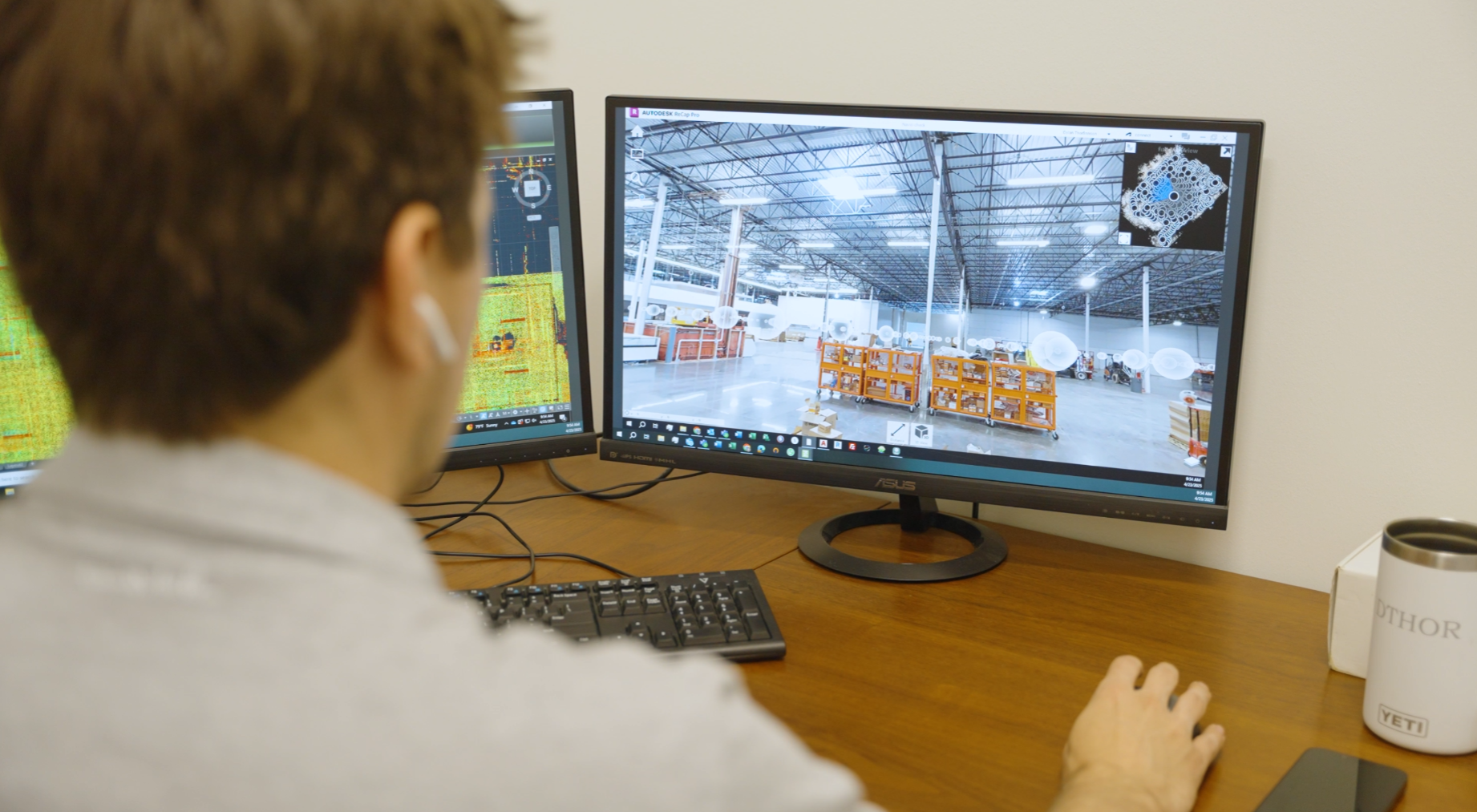
Building Information Modeling (BIM) is the process of using a coordinated digital model to plan, design, and manage how a project is built. Scan to BIM builds on that workflow by using laser scanning to capture real-world site conditions and convert them into a precise, build-ready 3D model. The process starts in the field, where high-resolution scanners collect millions of measurements that document geometry, elevations, and spatial relationships across the site.
That scan data is first processed into a point cloud. While point clouds provide precise measurement information, they are not inherently usable for coordination or installation planning. The value of Scan to BIM comes from translating that raw data into a digital twin that reflects actual field conditions.
During modeling, architectural, structural, and MEP elements are recreated to the level of detail required for the project. The result is an as-built model that teams can use for layout, routing, clash detection, and prefabrication planning. Because the model is based on verified measurements rather than assumptions, it provides a reliable reference for downstream coordination.
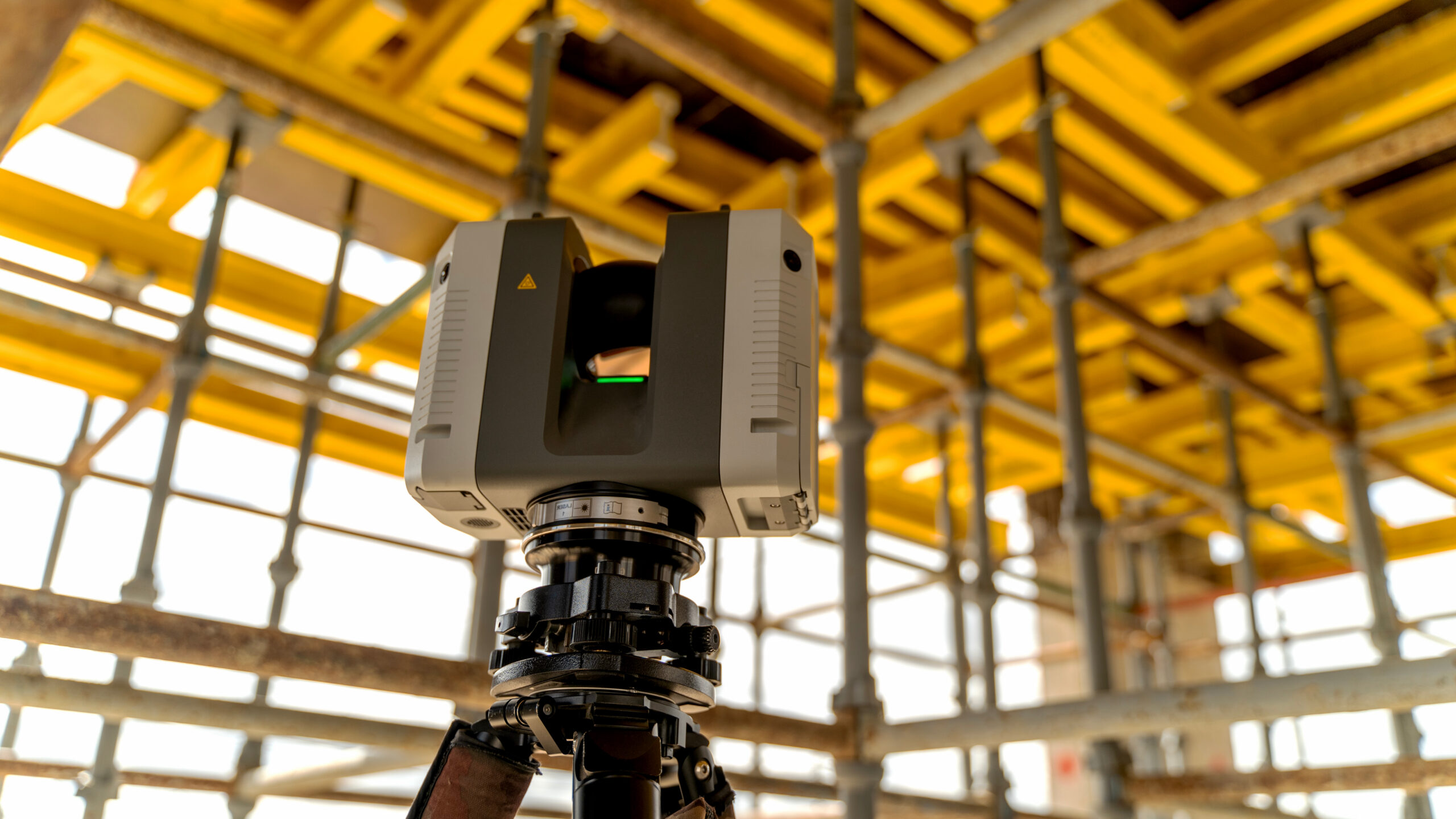
“Scan to BIM isn’t just about capturing geometry. It’s about building a model that supports trade coordination workflows, so clash detection, routing review, and layout planning are grounded in what’s physically there. The model is a tool, rather than a picture,” says ZELUS Preconstruction Director Ron Nauta.
In practice, Scan to BIM allows project teams to work from a single, accurate representation of the space. Designers can validate design intent against real conditions. Contractors can coordinate systems with confidence that clearances and elevations are correct. Owners gain documentation that reflects what was actually built, not just what was intended.
Scan to BIM fits within a broader BIM workflow that supports coordination, constructability, and risk management across design and construction. For a deeper look at how BIM supports those outcomes, see our article on the Top 5 Benefits of BIM.
How Does Scan to BIM Save Time?
Scan to BIM saves time by eliminating repeated field verification and late-stage clash resolution, which slow coordination and disrupt installation. By removing those interruptions, teams often achieve schedule compression without accelerating crews or stacking trades. When teams don’t have to stop work to confirm dimensions or re-route systems mid-install, schedules stay intact.
Time losses on construction projects rarely come from a single issue. They accumulate through small interruptions. Waiting on measurements. Revisiting spaces to confirm clearances. Pausing coordination while teams reconcile discrepancies between drawings and field conditions.
“Once crews and coordinators trust the model, we eliminate dozens of little field rechecks. It’s not that tasks go faster, it’s that they don’t stop while someone runs back to confirm a dimension,” says ZELUS Construction Manager Bo Hatfield.
Scan to BIM addresses those delays by establishing an accurate baseline before coordination begins. When teams have a model that reflects actual conditions, coordination meetings move faster because fewer questions need to be resolved in real time. Layout decisions can be made without sending crews back to the field to verify dimensions. Routing conflicts are identified in the model instead of during installation.
For trade partners, this means fewer interruptions once work starts. Fabrication can proceed with fewer adjustments. Installation crews spend less time stopping to resolve conflicts and more time executing planned work. Schedules benefit not because tasks suddenly move faster, but because fewer tasks need to be redone or re-sequenced.
Over the course of a project, these incremental time savings add up. Reduced coordination cycles, fewer RFIs tied to existing conditions, and less remobilization help teams maintain momentum instead of constantly reacting to new information.
How Does Scan to BIM Save Money?
Scan to BIM catches errors before they reach the field. It prevents rework, change orders, RFIs, and lost productivity.
Incomplete as-builts and undocumented changes force teams to estimate around gaps in information. When those assumptions prove wrong, that uncertainty leads to cost overruns.
Scan to BIM addresses this by giving estimators and coordinators a clearer picture of the scope before commitments are made. Quantities can be checked against real geometry. Clearance issues can be resolved before fabrication. Procurement decisions can be made with a better understanding of what the installation will actually require.
In renovation and retrofit projects, where conditions rarely match legacy drawings, Scan to BIM helps expose discrepancies early, allowing teams to address them during planning rather than absorbing the cost during construction.
“When we model an existing space accurately up front, unnecessary change orders and last-minute procurement shifts rarely appear later,” says ZELUS Existing Conditions Coordinator Kelly Brugger.
By identifying constraints before work reaches the field, Scan to BIM helps limit rework and avoid late-stage changes, supporting steadier cost control throughout the project.
Case Study Example: 65x ROI on a Mission-Critical Manufacturing Facility
On a four-story, 460,000-square-foot manufacturing facility with fixed production deadlines, ZELUS supported BIM coordination and virtual delivery workflows focused on keeping installation moving without disruption. The project schedule was directly tied to production readiness and downstream market commitments, leaving little tolerance for construction delays, rework, or execution risk.
Coordination efforts focused on shifting conflict resolution upstream, allowing trades to install from verified, constructible layouts rather than resolving issues in the field under schedule pressure.
Key coordination actions included:
- Routing conflicts resolved during coordination prior to fabrication
- Sleeve and blockout locations verified ahead of concrete placement
- Point coordination used to reduce field layout and survey adjustments
- Coordinated penetrations planned to limit late-stage redesign and RFIs
Documented project outcomes included:
- Clash detection and issue avoidance: $15,656,250
- Field point coordination savings: $558,000
- Sleeve and blockout planning savings: $89,100
In total, more than $16 million in quantified savings tied to clash avoidance, penetration planning, and coordinated point layouts represented approximately a 65x return compared to the coordination investment on this project.
By resolving routing, access, and embed decisions while systems were still flexible, the project team avoided downstream recovery work and limited coordination-driven interruptions during installation. The result was steadier installation flow, fewer corrective actions, and clearer ownership across trades as work progressed.
What Is the ROI on Scan to BIM?
When you reduce field hours, compress schedules, and avoid mistakes, the payoff adds up quickly—in time, cost, and risk avoided.
By reducing field hours, preventing rework, and keeping work sequenced as planned, Scan to BIM helps projects hold their schedule and budget instead of reacting to problems as they arise.
“On disciplined Scan to BIM projects, the biggest ROI isn’t a single line item. It’s the accumulation of fewer surprises, steadier sequencing, and a model that stays useful from precon through turnover,” says ZELUS COO Cary Burr.
Rather than relying on speculative gains, Scan to BIM delivers value by eliminating uncertainty at the source Field verified existing conditions reduce redesign, limit change orders, and surface conflicts before they reach the site. Accurate as-built models improve coordination across trades and protect schedules by ensuring teams are building from what is actually there, not what was assumed.
These benefits compound over the life of a project. Early coordination reduces downstream clashes. Cleaner installations shorten closeout. More accurate models support smoother turnover and facility documentation. Each phase builds on the last, turning early planning decisions into long-term cost control.
Predictable sequencing plays a central role. When teams know what will fit and when, labor can be scheduled more efficiently. Crews spend less time waiting for conflicts to be resolved and more time executing planned work. Productivity improves not because crews work faster, but because fewer interruptions break momentum.
Industry studies and internal project analyses show that when Scan to BIM is executed early and accurately, many of the typical pain points that drive cost increases and schedule delays are reduced.
On ZELUS engagements over the past ten years, scanned models and federated coordination environments have delivered the following observed outcomes:
- Approximately 95% of clashes are resolved prior to field installation, reducing the need for later reroutes and corrective work.
- Up to a 30% reduction in RFIs tied to existing conditions questions and design conflicts help coordination cycles close sooner.
- Schedule disruptions are often reduced by around 20%, based on fewer coordination hold-ups and more predictable sequencing.
- Clients saved an average of 11% in project costs when investing roughly 1% of project value in virtual technology solutions—including Scan to BIM and coordinated model workflows.
These figures reflect measured performance on ZELUS projects where the models were used as the foundational reference for coordination, estimating, and installation planning. They should not be interpreted as universal industry benchmarks, but as outcomes tied to disciplined Scan to BIM execution.
Why Choose ZELUS for BIM Services?
ZELUS approaches every deliverable with construction-first intent. Our technicians, VDC specialists, and project managers come from the field, and we build each dataset with installation, sequencing, and turnover in mind. We are people who have spent time in the field and understand your headaches firsthand, from incomplete drawings to coordination conflicts that surface too late. That experience directly informs how we capture and model existing conditions. Every scan, model, or analysis goes through a rigorous QA/QC workflow to ensure it reflects actual field conditions and can be used immediately in downstream coordination.
For Scan to BIM, that means converting field-verified scan data into build-ready models that represent how systems will be routed, installed, and coordinated in the field.
“We build models that reflect how work will actually get done in the field and that support installation planning and turnover without forcing teams to translate them first,” says Smerz.
Our team formats all deliverables for industry-standard platforms and trade workflows, so project teams can measure, coordinate and plan work without additional rework. This focus on accuracy and usability gives contractors, designers, and owners a dependable baseline they can trust through design, coordination, and installation.
Proven Experience on Complex Projects
ZELUS has delivered Scan to BIM solutions across a wide range of complex built environments, including semiconductor facilities, large distribution centers, healthcare campuses, airport terminals, and sports venues, helping teams coordinate systems, validate conditions, and plan installations with real-world accuracy.
Ready to See Scan to BIM in Practice?
If you’re planning a renovation, retrofit, or complex new build, reviewing a real Scan to BIM model can help clarify how verified existing conditions support coordination and installation planning.
See a sample Scan to BIM model or talk with our team about your project scope.